-
Your shopping cart is empty!

Air Particle Count in GMP Cleanrooms | The Invisible Risk That Determines Batch Quality
Tuesday March 3rd, 2026
-
0 lượt xem
🚨 The Most Dangerous Threat in a Cleanroom Is the One You Cannot See
One cubic meter of air can determine whether:
- A sterile drug batch is released to market
- Or rejected during final quality control
That silent power is called Air Particle Count — the measurement of the number and size of airborne particles.
In pharmaceutical and biotechnology manufacturing, an air particle counter is not merely a measurement device.
It is a real-time risk gatekeeper protecting product sterility, regulatory compliance, and patient safety.
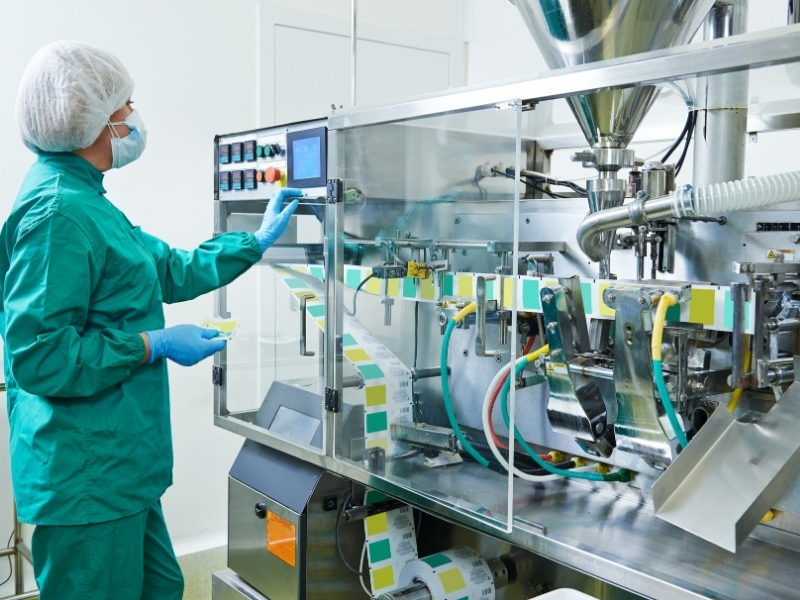
1️⃣ What Is Air Particle Count — and Why Does Science Take It Seriously?
Air Particle Count measures:
- The number of airborne particles in a defined volume of air
- Classified by size (≥0.3 µm, ≥0.5 µm, ≥5.0 µm, etc.)
These particles can be:
Biological
- Bacteria
- Fungal spores
- Viruses
Non-biological
- Dust
- Fibers
- Pollen
- Smoke
📌 Cleanroom research consistently shows that over 90% of airborne microorganisms attach to particles ≥0.5 µm, making particle concentration a validated surrogate indicator for microbial contamination risk.
Therefore, particle counting is widely recognized as a scientifically supported indirect indicator of microbiological risk.
2️⃣ ISO 14644-1 Does Not Estimate — It Quantifies
The ISO 14644-1 standard defines strict maximum particle limits for each cleanroom classification.
For example:
ISO Class 5 requires:
≤ 3,520 particles ≥0.5 µm per cubic meter
If this threshold is exceeded, the consequences may include:
- Deviation report generation
- Root cause analysis (RCA)
- Batch impact assessment
- Potential product rejection
In sterile production environments (Grade A/B under EU GMP Annex 1):
📉 Risk assessments demonstrate that particle excursions can increase the probability of microbial contamination by 2–5 times — even when microbial plates still “pass.”
This means waiting for microbiological results may already be too late.
3️⃣ Why Elevated Particle Counts Represent Real Risk
3.1 Sterility Test Failure
Larger airborne particles carrying microorganisms may:
- Fall into the filling zone
- Adhere to rubber stoppers
- Contaminate surfaces during aseptic transfer
- A single contamination event can invalidate an entire sterile batch.
3.2 Microbial Carryover in Aseptic Filling
A localized airflow disruption or particle “hotspot” may cause:
- Cross-contamination between batches
- Re-validation requirements
- Delayed batch release
- Regulatory scrutiny
3.3 Hospital-Associated Infections (HAIs)
According to the World Health Organization (WHO):
- 7–10% of hospitalized patients worldwide acquire healthcare-associated infections (HAIs).
- Airborne contamination is a significant contributing factor, especially in operating rooms and intensive care units.
- This underscores the broader importance of particle control beyond pharmaceutical manufacturing.
4️⃣ The Economic Impact Few Companies Discuss
In pharmaceutical and biotech manufacturing:
- A failed particle monitoring event can halt production
- A rejected sterile batch may cost between USD 100,000 and USD 1,000,000+
- Regulatory bodies such as the FDA require continuous particle monitoring in Grade A/B environments
Air particle monitoring is not an operational expense —
It is a revenue protection mechanism.
5️⃣ Periodic vs. Continuous Particle Monitoring
Periodic Monitoring
- Suitable for Class C/D environments
- Scheduled qualification or re-certification
- Snapshot compliance verification
Continuous Monitoring
- Mandatory for Grade A
- Real-time alarm capability
- Immediate deviation investigation support
- Data trending and audit readiness
Modern GMP strategies increasingly favor continuous monitoring systems integrated with centralized data management platforms.
6️⃣ Why Filterfine Vietnam Is the Right Partner
Filterfine Vietnam provides comprehensive cleanroom and environmental monitoring solutions, including:
- ISO-compliant air particle counters
- Liquid particle counters
- HEPA filter leak testing equipment
- Integrated continuous monitoring systems
Our advantages:
✔ Deep technical consulting to optimize risk and cost
✔ IQ/OQ validation support
✔ GMP-compliant data integration
✔ 24/7 technical assistance
We do not simply supply instruments.
We deliver validated contamination control strategies.
7️⃣ Clean Air = Compliance + Patient Safety + Brand Trust
Clean air is not about comfort.
It determines:
- Regulatory compliance
- Patient safety
- Brand reputation
- Audit success
If you can measure particles, you can control risk.
If you do not measure, risk already exists in the air.
📞 Need Expert Support for GMP Particle Monitoring?
Contact Filterfine Vietnam if you are:
- Preparing for a GMP audit
- Expanding a sterile production line
- Investigating particle excursions
- Upgrading to continuous monitoring systems
📌 Hotline: +84 961 152 844
📌 Email: phuongnguyen@filterfinevn.com
🚀 24/7 technical emergency support
Tin liên quan
- WENZEL CMM: A Solution for Every Inspection Need
- WENZEL XP: High-Accuracy Coordinate Measuring Machine for the Shop Floor
- Kalrez® vs. Viton™: Which Sealing Material Is Right for Your Application?
- Three Layers of Data Continuity with the Lighthouse ApexZ Particle Counter
- Industrial Wastewater Monitoring: Inline Concentration Measurement for Better Process Control