-
Your shopping cart is empty!

Kalrez® vs. Viton™: Which Sealing Material Is Right for Your Application?
Wednesday November 4th, 2026
-
0 lượt xem
Choosing the right sealing material can make the difference between reliable equipment performance and premature seal failure. In demanding industrial applications, two materials are frequently considered: Kalrez® (FFKM, perfluoroelastomer) and Viton™ (FKM, fluoroelastomer).
Both are designed for environments where standard rubber cannot perform, but they are not interchangeable. Operating temperature, chemical exposure, service conditions, service life and cost all influence the choice. Understanding the differences between Kalrez and Viton will help you select the right material for your gaskets, O-rings and other sealing components.
What Is Viton™ (FKM)?
Viton™ is a well-known brand of fluoroelastomer, commonly referred to as FKM. FKM materials are widely used for industrial seals and gaskets because they combine heat resistance, chemical resistance and durability. Viton seals are commonly found in applications involving oils, fuels, lubricants, many acids and other aggressive fluids that conventional rubber cannot withstand.
Depending on the specific compound and application, Viton can be used for:
- O-rings
- Custom-sized gaskets
- Valve and pump seals
- Chemical processing equipment
- Oil and fuel systems
- Industrial piping and equipment
For many industrial applications, FKM offers a good balance between performance and cost.
What Is Kalrez® (FFKM)?
Kalrez® is a high-performance perfluoroelastomer (FFKM) developed for extremely demanding sealing environments.
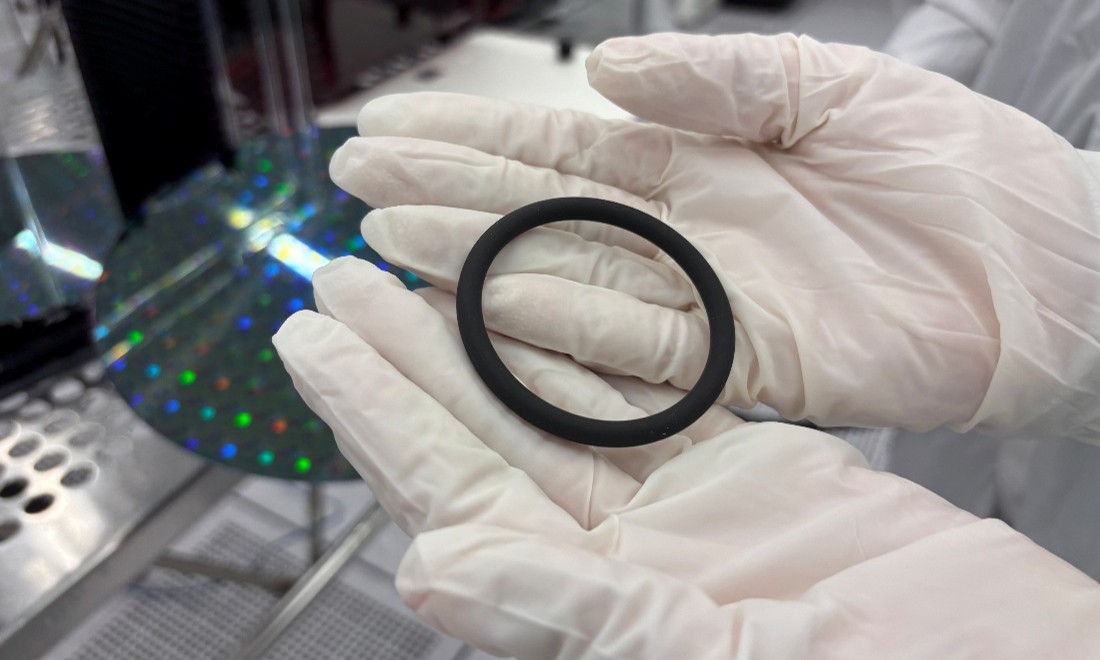
FFKM materials combine the elastic sealing properties of elastomers with exceptionally broad chemical resistanceand high-temperature capability. This makes Kalrez particularly valuable where conventional elastomers, including many FKM compounds, degrade quickly. Kalrez seals are commonly used in industries such as:
- Chemical and petrochemical processing
- Oil and gas
- Semiconductor manufacturing
- Pharmaceutical processing
- Aerospace
- High-temperature industrial equipment
- Aggressive chemical handling systems
Each Kalrez compound is engineered for a specific operating environment, so choosing the right compound is just as important as choosing FFKM itself.
Kalrez® vs. Viton™: What Is the Difference?
The core difference lies in the elastomer chemistry: Viton is an FKM, while Kalrez is an FFKM. The higher level of fluorination in FFKM generally provides broader chemical resistance and the ability to perform under more severe operating conditions. However, that added performance comes at a significantly higher material cost.
The right choice should be based on the actual conditions of your application, rather than simply selecting the highest-performance material available.
| Criteria | Viton™ (FKM) | Kalrez® (FFKM) |
|---|---|---|
| Material type | Fluoroelastomer (FKM) | Perfluoroelastomer (FFKM) |
| Chemical resistance | Excellent | Exceptional |
| High-temperature performance | Very good | Exceptional |
| Relative cost | Lower | Significantly higher |
| Typical applications | General industrial applications, oil and gas systems, and environments with chemical exposure | Severe chemical environments and high-temperature operating conditions |
| When to use | When FKM fully meets chemical compatibility and service life requirements | When FKM can no longer reliably withstand actual operating conditions |
When Should You Use Viton?
Viton is a good choice when an application requires strong chemical and temperature resistance but does not justify the cost of FFKM. For many industrial sealing applications, Viton provides sufficient performance. It is suitable when the seal will encounter petroleum oils, fuels, lubricants, hydraulic fluids or certain chemicals, provided the specific FKM compound is compatible with the operating media and temperature.
Viton is also commonly selected when equipment needs reliable long-term sealing but operating conditions are not especially severe.
When Should You Use Kalrez?
Kalrez delivers the most value when seal failure is expensive, dangerous or disruptive.
In severe chemical environments or at elevated temperatures, an FKM seal may swell, harden, crack or otherwise deteriorate. Switching to an appropriate Kalrez compound can provide substantially greater resistance under those conditions.
Consider Kalrez when:
- The application involves highly aggressive chemicals.
- Operating temperatures exceed the limits of the selected FKM compound.
- Frequent seal replacement causes excessive equipment downtime.
- Contamination from seal degradation cannot be tolerated.
- Seal reliability is critical to process safety or production.
- A longer service interval can justify the higher initial material cost.
The question is not whether Kalrez is a “better” material. The question is whether your application requires the additional capabilities of FFKM.
Is Kalrez Worth the Higher Cost?
Kalrez is considerably more expensive than Viton, so cost is an important part of material selection. Looking only at the purchase price of the seal, Viton is typically the more economical option. However, the price of the seal itself is not always the largest expense.
Consider the total cost of a failure:
Seal cost + Labor + Equipment downtime + Lost production + Cleanup + Potential equipment damage
If an inexpensive seal requires frequent replacement, while a higher-performance FFKM seal can remain in service substantially longer, the more expensive material may ultimately deliver a lower total operating cost. For critical equipment, seal life and downtime should be weighed alongside the initial material price.
FFKM vs. FKM: Chemical Resistance
Chemical compatibility is one of the most important factors when comparing FFKM and FKM. Both material families offer excellent chemical resistance compared with many conventional elastomers, but FFKM generally resists a broader range of aggressive media.
However, the material family alone should never determine compatibility. The specific chemical, concentration, temperature, pressure and exposure conditions all matter, and different grades within the same family can behave differently. For this reason, you should evaluate the complete operating environment before selecting a sealing material.
Do Not Overlook the Specific Compound
Choosing between Kalrez and Viton is only the first step. Both families include multiple grades and compounds, and a compound designed for one environment may not suit another.
When selecting a material, consider:
- Operating temperature
- System pressure
- Chemical or process media
- Chemical concentration
- Static or dynamic service
- Required seal life
- Equipment and flange design
- Regulatory or cleanliness requirements
Providing this information when requesting a quotation for a gasket or seal helps identify the most suitable material for your application.
Kalrez® by DuPont in Vietnam: Filterfine Vietnam
Filterfine Vietnam is the representative and distributor of DuPont Kalrez® products in Vietnam, supporting customers in the chemical, oil and gas, semiconductor, pharmaceutical and high-temperature industries.
When you work with Filterfine Vietnam, you receive:
- Guidance in selecting Kalrez®/FFKM O-rings and gaskets based on your actual operating conditions
- Compatibility assessment between Kalrez compounds and your system’s chemicals, temperature and pressure
- Genuine Kalrez products from DuPont
- Quotation and technical support for your specific application
Need help choosing Kalrez for your application? Contact Filterfine Vietnam with your operating temperature, pressure, media and seal dimensions, and our team will help you select the right compound.
📞 Hotline: 0961.152.844
Tin liên quan
- WENZEL CMM: A Solution for Every Inspection Need
- WENZEL XP: High-Accuracy Coordinate Measuring Machine for the Shop Floor
- Three Layers of Data Continuity with the Lighthouse ApexZ Particle Counter
- Industrial Wastewater Monitoring: Inline Concentration Measurement for Better Process Control
- Surface Cleanliness in Semiconductor Fabs: Measurements and What They Mean in Practice