-
Your shopping cart is empty!

Industrial Wastewater Monitoring: Inline Concentration Measurement for Better Process Control
Thursday October 22nd, 2026
-
0 lượt xem
Industrial wastewater monitoring is about more than meeting discharge requirements. Sudden changes in chemical concentration can lead to raw material losses, overload downstream treatment systems, and cause wastewater to exceed discharge limits before operators have time to respond.
This article explains why inline liquid concentration measurement is valuable in industrial wastewater applications, how process refractometers work, the limitations of refractive index measurement, and how to select suitable Vaisala process measurement solutions supplied by Filterfine Vietnam.
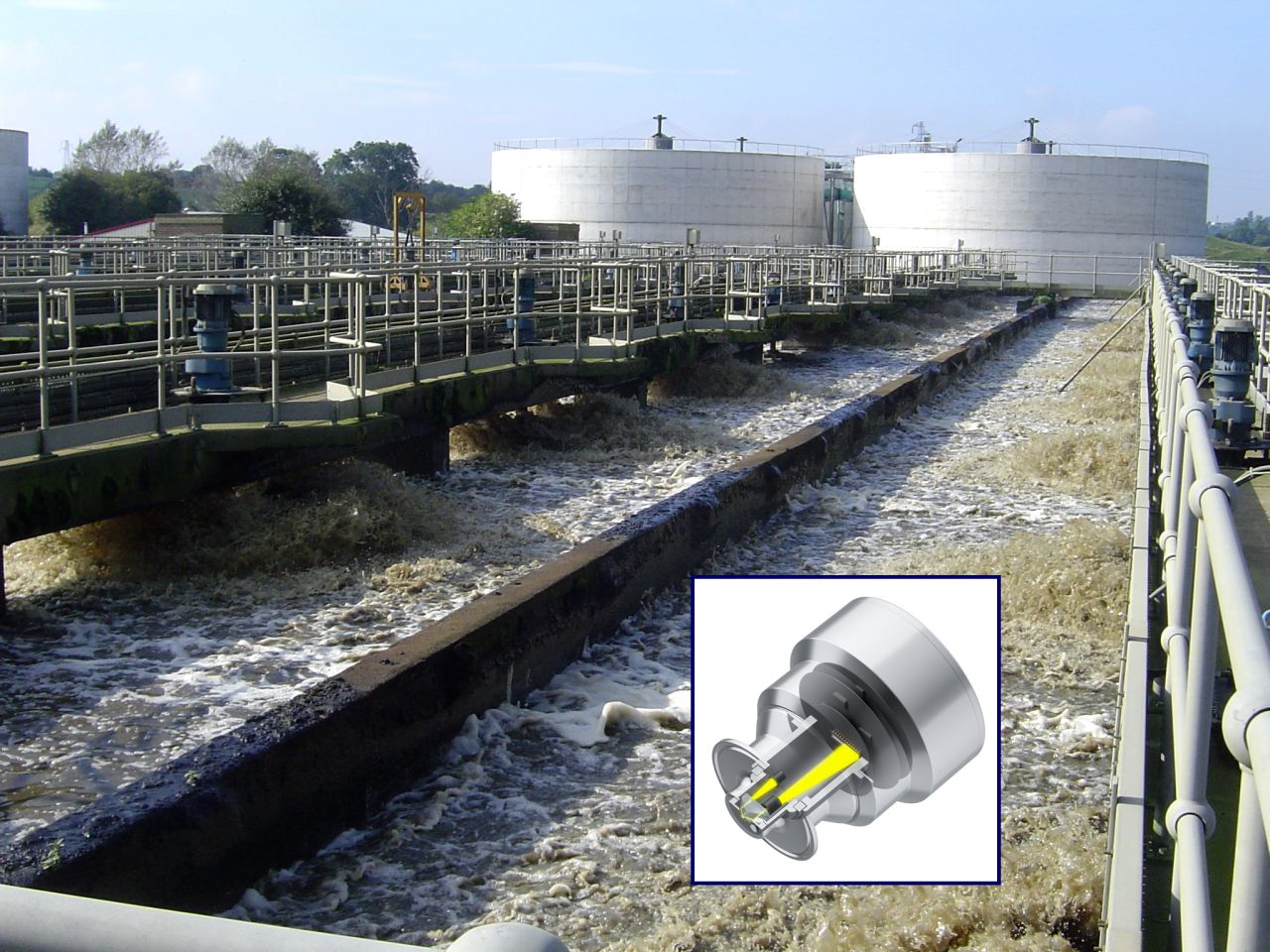
Why Measure Liquid Concentration Inline in Industrial Wastewater Systems?
Laboratory sampling and analysis can provide accurate results, but the time required to collect samples, transport them, and complete testing may range from hours to days, depending on the method and laboratory workflow. During this interval, wastewater may already have passed through treatment stages or reached the discharge point.
Inline concentration measurement provides continuous process data, helping operators identify abnormal conditions as they occur and respond before they develop into more serious operational problems.
Key benefits include:
- Early detection of product and chemical losses: Sudden increases in chemical or product concentration in wastewater may indicate leakage, spills, or process deviations upstream.
- Protection of downstream treatment systems: High-concentration wastewater can overload neutralization tanks, biological treatment systems, or membrane filtration units.
- Optimized chemical consumption: Understanding incoming wastewater concentration can help operators adjust neutralization and precipitation dosing, reducing unnecessary chemical use.
- Improved process monitoring and reporting: Continuous measurement data can support operational records, process investigations, and environmental compliance activities.
- Potential recovery of valuable materials: In suitable applications, identifying concentrated chemical streams can help facilities evaluate opportunities for recovery rather than disposal.
Challenges of Measuring Industrial Wastewater
Industrial wastewater can contain acids, alkalis, solvents, suspended solids, and substances that accumulate on sensor surfaces.
Measurement equipment must therefore be selected according to the actual process conditions, including:
- Chemical compatibility and corrosion resistance.
- Fouling and scaling potential.
- Changes in temperature and pressure.
- Suspended solids, turbidity, and entrained air.
- Required measurement range and response time.
- Maintenance accessibility and integration with existing control systems.
These challenges make industrial process instruments an important consideration when designing a reliable inline measurement solution.
Inline Refractometry: Working Principle, Benefits, and Limitations
A process refractometer measures the refractive index of a liquid, which describes how light changes direction as it passes through a material.
The refractive index changes with the composition of the liquid. For suitable solutions, this relationship can be used to determine concentration, such as mass percentage, after appropriate calibration and temperature compensation.
The relationship between refractive index and concentration depends on the specific substance or mixture being measured. A suitable calibration model is therefore essential for obtaining meaningful process data.
Benefits of Inline Refractive Index Measurement
- Continuous, real-time measurement: Measures directly in a process pipe or tank, reducing reliance on manual sampling.
- Fast response to process changes: Helps operators identify concentration variations and take corrective action promptly.
- Suitable for selected demanding process environments: With appropriate wetted materials, refractometers can be used with certain corrosive or high-temperature process streams.
- Integration with automation systems: Compatible output options can transmit measurement data to PLC, DCS, or other process control systems for monitoring, alarms, and control functions.
- Reduced sampling workload: Continuous measurement can reduce the need for frequent manual sampling for the specific parameter being monitored.
Important Limitations to Consider
Refractometry is most suitable when the target substance or solution produces a measurable and sufficiently consistent change in refractive index.
It is important to understand that:
- Refractometers do not directly measure trace contaminants at ppm or ppb levels unless a specific, validated application supports the required sensitivity.
- Refractive index measurement does not directly determine COD, BOD, or heavy metal concentrations.
- Mixed wastewater streams may contain multiple dissolved substances that affect refractive index, making a unique concentration calculation difficult without application-specific calibration.
- Suspended solids, deposits, bubbles, temperature variations, and changes in liquid composition may affect measurement performance, depending on the instrument and application.
For these reasons, inline refractometers are generally best suited to concentrated process streams, chemical concentration monitoring, selected wastewater applications, or early detection of process upsets. They should not be treated as a universal replacement for laboratory analysis or dedicated wastewater quality analyzers.
Before selecting a sensor, engineers should identify the target liquid, concentration range, operating temperature, pressure, chemical compatibility requirements, and the measurement objective.
Selecting the Right Vaisala Process Refractometer from Filterfine Vietnam
Filterfine Vietnam supplies Vaisala process refractometers and compatible measurement and transmitter solutions for industrial applications.
The following product categories provide a starting point for selecting a suitable configuration. Final selection should be confirmed against the actual liquid composition, installation requirements, and operating conditions.
General-Purpose Process Refractometers
| Product | Typical application focus |
|---|---|
| Vaisala Polaris PR53SD Process Refractometer | Inline concentration measurement in suitable process piping applications |
| Vaisala Polaris PR53GC Compact Process Refractometer | Compact installations and smaller process pipes |
| Vaisala Polaris PR53GP Probe-Type Process Refractometer | Probe-style installation in suitable pipes or tanks |
Hygienic Process Refractometers
| Product | Typical application focus |
|---|---|
| Vaisala Polaris PR53AC Sanitary Compact Process Refractometer | Hygienic applications and compact process installations |
| Vaisala Polaris PR53AP Sanitary Probe-Type Process Refractometer | Hygienic applications requiring probe-style installation |
Hygienic models are primarily intended for applications with specific sanitary design requirements. For industrial wastewater, the suitability of a hygienic model should be assessed against chemical compatibility, mechanical installation, and process conditions rather than assumed from its sanitary design alone.
Transmitters and Process Measurement Systems
| Product | Role in the measurement system |
|---|---|
| Vaisala Indigo520 Liquid Concentration Measurement Transmitter | Displays and processes measurement signals from compatible sensors |
| Vaisala Indigo500 Series Concentration Measurement System | Measurement system configuration based on the Indigo500 series |
| Vaisala Indigo200 Series Industrial Transmitter | Transmits compatible sensor signals for industrial monitoring |
| Vaisala Indigo300 Industrial Transmitter | Industrial measurement interface and system integration |
For the complete product range, visit Filterfine Vietnam’s Liquid Concentration Measurement and Monitoring Equipment category.
Combining Concentration Measurement with Filtration and Process Design
Inline concentration measurement can be more effective when the sensor is installed in a well-designed process line with appropriate flow conditions and maintenance provisions.
In some applications, preliminary filtration may help remove suspended solids that could accumulate on the sensor or interfere with the measurement. However, filtration should be selected according to the nature of the wastewater and the measurement objective. It is not always necessary, and it does not remove every dissolved substance that may affect refractive index.
Filterfine Vietnam also supplies filtration equipment that may be considered as part of a broader process solution:
These filtration solutions can be evaluated alongside concentration measurement equipment when the application requires solids removal or process protection.
Recommended Steps for Implementing Inline Concentration Measurement
1. Assess the target stream
Identify the liquid composition, target substance, concentration range, temperature, pressure, and potential sources of process variation.
2. Select the sensor and transmitter
Confirm the measurement principle, wetted materials, installation design, output signals, and compatibility with the liquid being measured.
3. Design the installation point
Select a representative measurement location with suitable flow conditions. Avoid installation arrangements that promote air accumulation, stagnant flow, or unrepresentative sampling of the process stream.
4. Configure calibration and system integration
Establish an application-specific relationship between refractive index and the target concentration. Connect the measurement system to the PLC or DCS, verify signal scaling, and configure appropriate alarms.
5. Establish inspection and maintenance procedures
Monitor measurement trends, inspect for deposits, and clean the sensor as required by the process conditions and manufacturer’s recommendations.
Frequently Asked Questions About Inline Wastewater Concentration Measurement
Can a process refractometer measure COD or BOD in wastewater?
No, not directly. A process refractometer measures refractive index and uses an appropriate calibration relationship to determine the concentration of a suitable liquid solution.
COD and BOD represent different water quality parameters and require dedicated analytical methods or instruments. A refractometer should not be used as a substitute unless a specific indirect correlation has been validated for the application.
Can Vaisala measurement data be integrated with an existing control system?
Yes, compatible Vaisala sensor and transmitter configurations can provide measurement signals for integration with industrial automation systems. The available output and communication options depend on the selected model and configuration.
The required signal type, communication protocol, PLC or DCS interface, and control strategy should be confirmed during system design.
How often does an inline refractometer need maintenance?
Maintenance frequency depends on the liquid composition, fouling potential, operating conditions, and installation arrangement.
Streams containing substances that readily form deposits may require more frequent inspection and cleaning. Where appropriate, upstream solids removal can help reduce fouling, but its effectiveness must be assessed for each application.
Is an inline refractometer suitable for every industrial wastewater stream?
No. Suitability depends on whether the target substance produces a measurable refractive index change and whether the relationship remains sufficiently consistent under actual process conditions.
For dilute contaminants, complex mixtures, or applications requiring direct measurement of specific regulatory parameters, another analytical technique may be more appropriate.
Conclusion: Improve Industrial Wastewater Monitoring with Inline Measurement
Inline liquid concentration measurement can help industrial facilities detect process deviations earlier, reduce avoidable material losses, protect downstream treatment systems, and improve operational visibility.
When the target liquid is suitable for refractometry, a properly selected Vaisala process refractometer can provide continuous concentration data to support process monitoring and control.
Choosing the right solution requires more than selecting an instrument from a product list. It involves understanding the liquid composition, defining the measurement objective, verifying material compatibility, and designing an appropriate installation and calibration strategy.
Filterfine Vietnam supplies Vaisala measurement solutions and industrial filtration equipment for applications across Vietnam.
Contact our technical team to discuss your wastewater monitoring requirements and identify a suitable measurement configuration.
- Website: https://filterfinevn.com
- Contact: Contact Filterfine Vietnam
- Hotline: 0961 152 844
Tin liên quan
- WENZEL CMM: A Solution for Every Inspection Need
- WENZEL XP: High-Accuracy Coordinate Measuring Machine for the Shop Floor
- Kalrez® vs. Viton™: Which Sealing Material Is Right for Your Application?
- Three Layers of Data Continuity with the Lighthouse ApexZ Particle Counter
- Surface Cleanliness in Semiconductor Fabs: Measurements and What They Mean in Practice