-
Your shopping cart is empty!

Surface Cleanliness in Semiconductor Fabs: Measurements and What They Mean in Practice
Wednesday October 21st, 2026
-
0 lượt xem
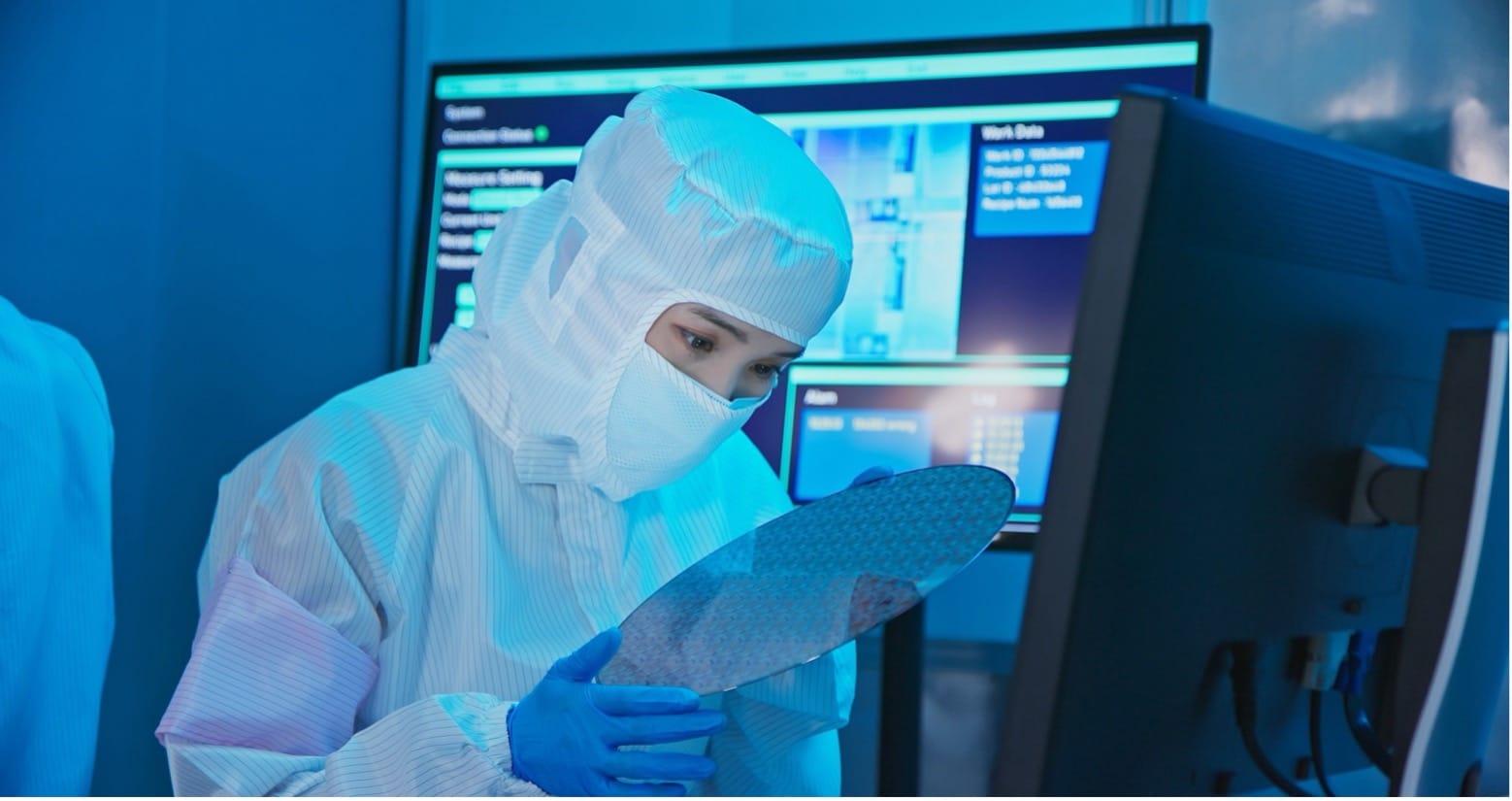
Surface cleanliness in semiconductor fabs directly determines the share of chips that pass inspection, because a single particle only tens of nanometers wide can ruin an integrated circuit. To manage this risk, fabs do not only measure the air in the cleanroom. They also test the surfaces of equipment, wafers, tools and materials that touch the product.
This article helps engineers, QA staff and purchasing teams understand which types of surface contamination exist, what each measurement verifies, which standards to reference and what role filtration plays in the overall control chain.
Why surface cleanliness directly affects yield
As device features shrink to a few nanometers, the size of a killer particle shrinks with them. A single particle on a wafer, or on a surface that touches a wafer, can cause a short circuit, an open circuit or a defect in the thin film being deposited.
There are three reasons surface measurements need to run alongside air measurements:
- Clean air does not guarantee a clean surface, because particles may have settled earlier, come from handling or come from the material itself.
- A dirty surface is a secondary source of contamination: particles and chemicals can detach, enter the air and then land on the wafer.
- Molecular contamination (organic vapors, acids, bases) is invisible, yet it still degrades film quality and adhesion.
An effective contamination control program therefore combines air monitoring, surface monitoring and incoming material checks.
Four groups of surface contamination to control
- Particles: dust, material fragments, fibers, skin flakes. This is the most visible group and directly causes physical defects on the circuit.
- Non-volatile residue (NVR): oils, grease, plasticizers and cleaning agent residue. These reduce coating adhesion and can slowly outgas.
- Ions and metals: sodium, potassium, chloride and trace metals. This group causes leakage, corrosion and shifts in device characteristics.
- Airborne molecular contamination (AMC): acids, bases, organic condensables and dopants that settle onto surfaces from the air.
Each group needs its own measurement, because no single instrument can verify all four at once.
Measurement methods and what each one verifies
Surface particle counting
This measures the number and size of particles per unit area, usually with a wafer surface scanner or by sampling and counting. The result verifies that the surface carries no more particles than allowed at the sizes that cause defects.
Wipe or swab sampling
The surface is wiped with a clean material, and the solvent or wipe is then analyzed. This verifies whether cleaning has actually removed residue, including in hard-to-reach places.
Non-volatile residue (NVR) testing
A solvent extracts the residue, which is then weighed or analyzed by spectroscopy. The result shows how much oil, grease and organic material remains after cleaning.
Ion analysis by ion chromatography
An extract from the surface is analyzed to determine concentrations of ions such as chloride, sulfate and sodium. This verifies that the rinse process does not leave ions that cause corrosion or leakage.
Water contact angle measurement
A water droplet is placed on the surface and its contact angle is measured. The method is fast and inexpensive, and it shows whether a thin organic film covers the surface, which makes it useful for quick checks before the next process step.
AMC monitoring
Air samplers or witness plates placed in the cleanroom show the concentration of acids, bases and organics that can deposit on surfaces. This verifies that the surrounding environment is not adding molecular contamination to the product.
Quick comparison of the measurements
| Measurement | Contamination group | What it verifies | Speed | When to use |
|---|---|---|---|---|
| Surface particle counting | Particles | Particle count by size per area | Fast | Routine checks of wafers and equipment |
| Wipe/swab | Particles, chemicals | Cleaning effectiveness at a specific spot | Medium | Acceptance after cleaning |
| NVR | Organic films | Oil, grease and organic residue | Slow | Components, piping, process chambers |
| Ion chromatography | Ions, metals | Ion levels that cause corrosion or leakage | Slow | After rinsing, new materials |
| Water contact angle | Thin organic films | Whether a film covers the surface | Very fast | Quick on-site checks |
| AMC monitoring | Airborne molecules | Acid, base and organic levels in the environment | Continuous or batch | Lithography and other sensitive areas |
Reference standards and choosing the right cleanliness level
The ISO 14644 series is the foundation for cleanrooms. ISO 14644-1 classifies air cleanliness by particle concentration, while ISO 14644-9 and ISO 14644-10 assess surface cleanliness by particle concentration and by chemical concentration respectively. ISO 14644-8 gives guidance on assessing airborne molecular contamination. Many fabs also reference customer-specific or semiconductor industry association requirements.
When choosing a cleanliness level, work through three steps:
- Identify the process step and the smallest killer particle size at that step.
- Choose the most critical contamination group (particles, organics, ions or AMC) and the matching measurement.
- Set acceptance limits, a sampling frequency and a corrective action for out-of-limit results, and write them into a documented procedure.
Note: check the latest edition of each standard when building your procedure, because versions may be updated.
Control process and the role of filtration
Measurement only has value when it sits inside a disciplined control process. Fabs typically apply the following chain:
- Source control: choose materials that shed few particles and volatile compounds, and clean tools before they enter the cleanroom.
- Environmental control: maintain pressure differentials and airflow, and filter air continuously with HEPA or ULPA filters, adding chemical filtration for AMC where needed.
- People control: gowning, entry procedures and operator training.
- Process fluid control: filter ultrapure water, chemicals and gases so the process media do not introduce contamination.
- Monitoring and corrective action: track data trends, investigate causes when limits are exceeded and verify again after the fix.
Within this chain, filters act as an active barrier that keeps particles and molecules out of the production area. Choosing the right filter grade, replacing it on schedule and leak testing it periodically help keep cleanliness stable, reduce cleaning frequency and limit contamination-related defects.
Frequently asked questions
How is surface cleanliness different from air cleanliness?
Air cleanliness measures particles suspended in the cleanroom, while surface cleanliness measures particles and chemicals deposited on an object. Air can meet its class limit while a surface is still dirty, so both need to be measured.
How often should surface cleanliness be checked?
Frequency depends on the risk level of the area and the process step. Areas in direct contact with wafers are usually checked more often, with extra checks after maintenance or an incident.
Is one measurement enough to conclude a surface is clean?
No. Each measurement verifies only one contamination group, so a control program needs to combine several methods according to its goals.
Do HEPA and ULPA filters help reduce surface contamination?
Yes. High-efficiency filtration keeps particles out of the air supplied to the cleanroom, which reduces the number that settle on surfaces and lowers the need for repeated cleaning.
Conclusion
Controlling surface cleanliness in a semiconductor fab takes several complementary measurements: particle counting, organic film checks, ion analysis and AMC monitoring, supported by a clear procedure and a suitable filtration system. When each measurement is chosen for the right purpose, a fab protects yield and keeps operating costs under control.
Filterfine Vietnam provides filtration solutions for cleanrooms and industrial processes that demand high cleanliness. Contact our technical team for advice on choosing the right filter grade and a maintenance plan that suits your facility.
Tin liên quan
- WENZEL CMM: A Solution for Every Inspection Need
- WENZEL XP: High-Accuracy Coordinate Measuring Machine for the Shop Floor
- Kalrez® vs. Viton™: Which Sealing Material Is Right for Your Application?
- Three Layers of Data Continuity with the Lighthouse ApexZ Particle Counter
- Industrial Wastewater Monitoring: Inline Concentration Measurement for Better Process Control